Saturday, May 18, 2013

Prompt #146 – Portrait Poem


I paint myself because I am often alone and I am the subject I know best.
– Frida Kahlo

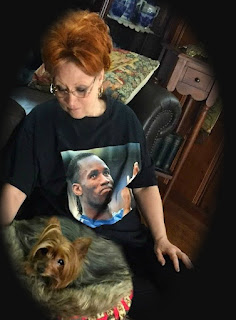
When I first saw DaVinci’s Mona Lisa in the Louvre many years ago, I understood why it’s probably the most famous portrait in the world. Another famous portrait with which many are familiar is Vermeer’s Girl with a Pearl Earring, which inspired the 2003 film of the same title. There are, of course, countless portraits in museums and galleries—faces that look back at us and make us wonder about their painted subjects. This week, the goal is to write a poem in which you create a “word portrait” of yourself (the person you know best, as Frida Kahlo notes in the quote above). Importantly, you will need to be descriptive, but the extra challenge is to be judicious in your use of adjectives and details.

1. One way to begin is to generate a list of words that describe or tell something about you. In generating this list, think about your personality, interests, relationships, memories, loves, dislikes, and desires.
2. Now, imagine looking into a mirror that reveals more than your physical image. What do you see? Add what you see to your list.
3. Next, choose three items from your list and begin writing about them. You’ll need to find connectors and complements for these items, and you’ll need to think hard about yourself in terms of how the items from your list impact or reflect you as a whole.
4. Begin writing (a free write first may be helpful). Review what you’ve written and work the best of it into your poem.
5. Think in terms of metaphors. What extended metaphor might you use to “word paint” your portrait?
6. Alternatively, create a word portrait of someone you know. Follow the same general process, and be sure you select someone you know well. A third possibility (if the first two don’t work for you) would be to write a poem about a famous portrait (in writing a poem based on a painting, you’ll be doing an ekphrastic poem—see prompt #79, September 19, 2011).

Examples:


Saturday, May 11, 2013

Prompt #145 – Letting Go


Some people believe holding on and hanging in there
are signs of great strength.
However, there are times when it takes much more strength
 to know when to let go and then do it.

— Ann Landers

In Prompt #144, we wrote about forgiveness and I mentioned the process of “letting go.” In any context, letting go is can be a painful (but sometimes necessary) part of life.  On the flip side, letting go can free us in much the same way that forgiving does. Have there been times in your life when you let something go and felt better for it?

In many ways, the past informs the present, but letting go is about much more than the past. Importantly, letting go is about freeing ourselves from fears, from impractical expectations, from uncertainties about ourselves, and it’s about affirming our value in the world.

This week, write a poem about a time that you let go.

Things to Think About before Writing:
  1. Is there a dream you’ve let go?
  2. Is there a person or group of people you’ve let go? Have you ever ended a relationship that wasn’t working? Have you ever deliberately said “good-bye” to someone or something and felt better (or worse) for having done so?
  3. Has there been a job you had to let go?
  4. Have you ever let go of any personality traits, ways of thinking, old habits?
  5. Has there ever been a hurt or an anger that you let go?
  6. Has there ever been something that you couldn’t let go?
  7. Is there something (or someone) in your life right now that you’ve thought about letting go?
Example:


Note: An alternative prompt for this week might be to look at the photo at the top and to write a "letting go poem" based on what the photo suggests to you.

Saturday, May 4, 2013

Prompt #144 – Forgiveness

To err is human; to forgive, divine.
—Alexander Pope

I recently came across Whittier’s “Forgiveness,” which made me think of personal “forgiveness experiences.” We all have them: things we’ve forgiven, things we can’t forgive, hurts that haunt us, people who refuse to forgive us

Forgiveness by John Greenleaf Whittier

My heart was heavy, for its trust had been
Abused, its kindness answered with foul wrong;
So, turning gloomily from my fellow-men,
One summer Sabbath day I strolled among
The green mounds of the village burial-place;
Where, pondering how all human love and hate
Find one sad level; and how, soon or late,
Wronged and wrongdoer, each with meekened face,
And cold hands folded over a still heart,
Pass the green threshold of our common grave,
Whither all footsteps tend, whence none depart,
Awed for myself, and pitying my race,
Our common sorrow, like a mighty wave,
Swept all my pride away, and trembling I forgave!


How often in our lives have we been hurt and carried that hurt with us, unable or unwilling to let it go? Holding onto anger and resentment can cause us extreme emotional stress, and often, we suffer more than the people who have hurt us. Such feelings can damage us emotionally and spiritually, but getting past them, releasing anger, resentment, and bitterness—forgiving—can lead us to inner peace. We all need to “forgive and forget” (though forgetting is sometimes harder than forgiving); and we all need to move forward, to let the past go. This can happen when we forgive. That said, I know how challenging true forgiveness can be, but forgiving (when we’re able to manage it) can be very freeing. Writing, too, can be freeing. This week, let’s use poetry to work toward resolving some forgiveness issues.

Suggestions:

Write a poem about someone you’ve forgiven or someone you haven’t been able to forgive.

Write a poem about something for which you need to be forgiven.

Write a poem about something for which you’ve forgiven or not forgiven yourself.

Write a poem about something you’ve forgiven but can’t forget.

Write a poem about a time in which you “let go” of something (or someone) through forgiveness.

Write a poem about someone who refuses to forgive you.

Tips:

1. This prompt lends itself to a narrative poem (a poem in which you tell a story).

2. Be careful not to over-tell; don’t include too many details; watch out for overuse of adjectives; and be especially wary of overstating sentiment and emotion. Focus on the elements of your story that readers will relate to (the details may be different, but the response you want to evoke is, “Yes, I know that feeling”).

3. Remember that your poem should contain no unnecessary words, no superfluous phrases, and no explanations. Center on strong images.

4. Use sounds (alliteration, assonance, internal rhymes) to help tell your story.

5. Try writing your narrative poem in the third person and, when you’ve completed it, change to the first person. Which version is better?


Examples:


Tuesday, April 30, 2013

The End of National Poetry Month


I’m always a little sad to see National Poetry Month come to an end, but here we are on April 30th. Like the time lilacs are in bloom, NPM never seems quite long enough. My sincerest thanks go to all of you who joined the celebration (as readers and as writers) on The Music In It, and a big THANK YOU to readers who posted poems and/or shared comments.

Special thanks and appreciation go to Basil Rouskas who, for the second year in a row, posted a poem every day and is the recipient of The Music In It National Poetry Month Award. Bravo, Basil!


Regular prompt posting will resume on Saturday, May 4th. In the meantime, here’s a wonderful  piece by poet Michael T. Young that takes a lighthearted look at the (sometimes agonizing) process of writing a poem. (I certainly identified with it and suspect that you will too!)

How a Poem is Written
by Michael T. Young
  1. A lot of words are scattered on a page.
  2. Unnecessary abstractions are reworked into images.
  3. Unnecessary images are struck out.
  4. Some commas are inserted, an M-dash and a semi-colon.
  5. Some long sentences are shortened.
  6. Some short sentences stretched out.
  7. Two words from the first line are brought to the second line.
  8. One word from the fifth line is brought to the sixth line.
  9. Some commas are removed and the semi-colon changed to a period.
  10. The short sentences that were stretched out are shortened again.
  11. The long sentences that were shortened are lengthened again.
  12. The last line is made the penultimate line and a new line written for conclusion. 
  13. The two words brought to the second line are deleted, requiring a new verb and relineation of lines 2 through 8.
  14. A new image inserted in line 13 pushes three words to line 14 requiring relineation of lines 15 to 20.
  15. 2 of the long sentences that were shortened and then lengthened are shortened again.
  16. Instead of lines with roughly ten syllables per line, everything is reorganized to have roughly six or  seven syllables per line.
  17. Realizing that was a bad idea, it’s all reorganized so every line is roughly fifteen syllables per line.
  18. Realizing that was a bad idea, it’s all reorganized back to roughly ten syllables per line.
  19. A day is spent wondering if it should be structured in blank verse as opposed to free verse.
  20. Remove all the punctuation.
  21. Change the title five times over a day.
  22. Put all the punctuation back in except for the M-dash.
  23. Insert some place names for local feel.
  24. Remove all but one place name because they seem clunky.
  25. Strike out everything from the first line to the penultimate line.
  26. Take the last line, make it the first line, and begin writing the poem.

A Note from Michael Young: I find that sometimes frustration can work itself to such a pitch that it ruptures into a moment of clarity.  Such was the source of this rant-like piece. I had been working every day on a single poem for about 2 months and felt no closer to getting it right. I don’t mind working on a poem for a long time, even years, as long as I have a sense that I’m getting a syllable closer to the mark. But when it seems there’s no progress, not even inching toward the invisible mark after endless revisions, well, that simply maddens me. Perhaps that’s why I have a somewhat obsessive way of writing; I can rarely stop thinking about a poem until it’s finished or I tear myself from it to retain my sanity. These are the poems that often, for me, become completely morphed in later years as the poem documented in this piece: a poem transformed into something completely unintended and, since writing is an act of discovery, better than one could ever intend. 

Please be sure to visit Michael online at www.michaeltyoung.com and at his blog (The Inner Music) http://inermusic.blogspot.com/


Saturday, March 30, 2013

Prompt #143 – National Poetry Month 2013


National Poetry Month, established by the Academy of American Poets in 1996 begins on April 1st!  This month-long celebration of poetry is held every April “to widen the attention of individuals and the media to the art of poetry, to living poets, to our complex poetic heritage, and to poetry books and journals of wide aesthetic range and concern.” During April, poets, poetry lovers, publishers, booksellers, literary organizations, libraries, and schools throughout the US celebrate poetry.

One of the challenges of NPM is to read and/or write a poem every day. So ... in the spirit of the observance, as I’ve done for the past few years, I offer you an inspiration word or phrase and a related poem for each of April’s thirty days. You may wish to read, write, or do both. Keep in mind that writing a poem a day doesn’t mean you have to “finish” each poem immediately. You can write a draft each day and set your drafts aside to work on later.

And … if you write a poem that relates to an inspiration word, don’t feel obligated to write anything that resembles the example poem in content or style. Give the topic your own spin!

As always, your sharing is welcome, 
so please be sure to post your thoughts and poems as comments!

Regular weekly prompts will resume on May 4th.
In the meantime, I wish you a wonderful and poetry-filled April!
Happy National Poetry Month!


April 1
Fools/April Fools
“I’m a Fool to Love You” by Cornelius Eady

April 2
April
“Just Before April Came” by Carl Sandburg

April 3
Yesterday
“Yesterday” by W. S. Merwin

April 4
Confessions
“My Turn to Confess” by Charles Simic

April 5
Memories
“Momentum” by Catherine Doty

April 6
Dust
“Dust” by Dorianne Laux

April 7
Birds
“The White Birds” by William Butler Yeats

April 8
Wind
“Rhapsody on a Windy Night” by T. S. Eliot

April 9
Security
“Security” by William Stafford

April 10
Rain
“Song for the Rainy Season” by Elizabeth Bishop

April 11
Remembrance
“Remembrance” by Rainer Maria Rilke

April 12
Dawn
“Walkers with the Dawn” by Langston Hughes

April 13
Solitude
“Solitude” by Anna Akhmatova

April 14
Decisions
“The Road Not Taken” by Robert Frost

April 15
Music
“Water Music” by Robert Creeley

April 16
Love
“Here and Now” by Stephen Dunn

April 17
Love Letters
My Father’s Love Letters” by Yusef Komunyakaa

April 18
Time and Space
“Theories of Time and Space” by Natasha Trethewey

April 19
Regrets
“Why Regret” by Galway Kinnell

April 20
Portraits
“The Portrait” by Stanley Kunitz

April 21
Afternoon
“Afternoon on a Hill” by Edna St. Vincent Millay

April 22
Truth
“seeker of truth” by e.e. cummings

April 23
Secrets
“The Secret” by Denise Levertov

April 24
Journey
“The Journey” by Mary Oliver

April 25
Prayer
“Prayer” by Jorie Graham

April 26
Blessings
“A Blessing” by James Wright

April 27
Callings
“A Calling” by Maxine Kumin

April 28
Gospels
“Gospel” by Phillip Levine

April 29
Spring
“Spring Comes on the World” by Emily Dickinson

April 30
Happiness
“Happiness” by Raymond Carver


Saturday, March 23, 2013

Prompt #142 – Celebrate Spring


Spring presents itself in body, mind, and spirit, and, for most people, it’s a time of hope—a bridge between winter’s darkness and summer’s fullness. In my part of the world, spring began last Wednesday (March 20th) and, although the weather remains cold, the sense of spring “being  here”  provides a lift to the spirits. In my front garden, the daffodils and hyacinths are up and should bloom in time for Easter. 

This week, let’s celebrate spring.

Things to Think About:
  • How does spring make you feel? 
  • What are some characteristics of springtime?
  • What specific seasonal changes occur in spring?
  • What are some springtime impressions derived through your five senses? How does spring look, feel, smell, taste, and sound? (How do the trees look in spring? How does a spring breeze feel on your face? How does the earth smell after a spring rain? What does a spring raindrop taste like? How do the birds sound in spring?)
  • What do the words lilacs, jasmine, orange blossoms, and peonies bring to mind?
  • Why is a sense of newness important to you?
  • What important thing happened to you during spring?
  • Is there a special person whom you associate with spring?
  • How would you describe spring in a way that’s unique, not the typical description?
  • What does spring represent to you?
  • How is spring a time of anticipation and possibilities?
Examples:


Happy spring, dear readers, may this new season bring you blessings and joy!

Next Saturday, March 30th, I’ll post the inspiration words and example poems 
for National Poetry Month and our annual poem-a-day throughout April, so stay tuned!

Saturday, March 16, 2013

Prompt #141 – Color Your Poem


With St. Patrick’s Day tomorrow, and everyone thinking green, I thought it might be interesting to think about various colors as the inspiration for this week’s prompt.

I didn’t realize, until I did some research for this post, that there’s a “psychology of colors.”  Without getting into color psychology too deeply, it’s generally understood that  colors can trigger psychological and emotional responses. Colors have prescribed “meanings.” Here are some that I found online:

Red—symbolizes excitement, energy, passion, love, desire, speed, strength, power, heat, aggression, danger, fire, blood, war, violence, all things intense and passionate.
 
Pink—symbolizes love and romance, caring, tenderness, acceptance and calm.
 
Beige and ivory—symbolize unification. Ivory symbolizes quiet and pleasantness. Beige symbolizes calm and simplicity.
 
Yellow—signifies joy, happiness, betrayal, optimism, idealism, imagination, hope, sunshine, summer, gold, philosophy, dishonesty, cowardice, jealousy, covetousness, deceit, illness, hazard and friendship.
 
Blue— symbolizes peace, tranquility, cold, calm, stability, harmony, unity, trust, truth, confidence, conservatism, security, cleanliness, order, loyalty, sky, water, technology, depression, appetite suppressant.
 
Turquoise—symbolizes calm. Teal symbolizes sophistication. Aquamarine symbolizes water. Lighter turquoise has a feminine appeal.
 
Purple—symbolizes royalty, nobility, spirituality, ceremony, mysterious, transformation, wisdom, enlightenment, cruelty, arrogance, mourning.
 
Lavender—symbolizes femininity, grace and elegance.
 
Orange–symbolizes energy, balance, enthusiasm, warmth, vibrant, expansive, flamboyant, demanding of attention.
 
Green—symbolizes nature, environment, healthy, good luck, renewal, youth, spring, generosity, fertility, jealousy, inexperience, envy, misfortune, vigor.
 
Brown—symbolizes earth, stability, hearth, home, outdoors, reliability, comfort, endurance, simplicity, and comfort.
 
Gray—symbolizes security, reliability, intelligence, staid, modesty, dignity, maturity, solid, conservative, practical, old age, sadness, boring. Silver symbolizes calm.
 
White—symbolizes reverence, purity, birth, simplicity, cleanliness, peace, humility, precision, innocence, youth, winter, snow, good, sterility, marriage (Western cultures), death (Eastern cultures), cold, clinical.
 
Black— symbolizes power, sexuality, sophistication, formality, elegance, wealth, mystery, fear, evil, unhappiness, depth, style, evil, sadness, remorse, anger, anonymity, underground, good technical color, mourning, death (Western cultures).


This week, choose a color and write a poem in which that color plays a role. In other words, don’t write about the color itself but, rather, use the color to help you develop a theme, mood, or narrative.

Things to Think About:

1. What mood does the color you chose suggest?
2. What emotions or feelings do you want your color to trigger?
3. What things in the natural world (or natural occurrences) do you associate with particular colors (i.e., a peaceful spring day, an autumn afternoon, winter, summer heat, a hurricane, a windy day or night)?
4. What colors do you associate with foods?
5. What colors do you connect to particular times in your life?
6. How do certain colors affect your moods?
7. Color harmony is a dynamic equilibrium—what color or colors do you associate with harmony in your life?
8. Does a particular hair color trigger a memory for you (your own hair color, coloring your hair, another person’s hair color—this one has potential for a humorous slant)?
9. Has the color of a room remained in your memory for any particular reason?
10.  What’s your favorite color to wear, paint your walls, choose for your car or the exterior of your home?

Tips:

1. Be creative with this! Remember, don’t just write about a color! Include your chosen color in your poem in a unique way.

2. IMPORTANT: this week focus on adjectives and limited use of them. Adjectives can be your poem’s biggest enemy! Here’s what some great authors have written about adjectives:

  • “When you catch an adjective, kill it. No, I don’t mean utterly, but kill most of them—then the rest will be valuable. They weaken when close together. They give strength when they are wide apart.” (Mark Twain)

  • Use no superfluous word, no adjective, which does not reveal something.” (Ezra Pound)

  • “The adjective has not been built that can pull a weak or inaccurate noun out of a tight place.” (E. B. White)

  • “Most adjectives are also unnecessary. Like adverbs, they are sprinkled into sentences by writers who don’t stop to think that the concept is already in the noun.” (William Zissner)

Examples:


Saturday, March 9, 2013

Prompt #140 – Morning, Noon, Evening, Night


Have you ever described yourself as a morning or nighttime person? A lark or a night owl? Some of us are raring to go first thing in the morning, while others “come alive” at night. There are also afternoon and evening people who prefer those times of the day for getting things done. With this prompt, I’d like you to think about various times of day and night and work one into a poem.

Things to Think About:
  • How are morning, afternoon, evening and night symbols of life’s stages? Can you use find a way to use this metaphor in a new way that isn’t trite or “already done?”
  • Think about whether you’re a morning, afternoon, evening, or night person? Can you compare yourself to a particular animal or bird that you might use as a metaphor for yourself in a poem?
  • Think of ways in which you can incorporate morning, afternoon, evening, or night into a poem.
  • Is there a particular time of day that you especially enjoy?
  • Has something (good or not-so-good) happened to you at a particular time of the day?
  • Remember the old adage, “timing is everything?” How can you relate that to a poem in which you incorporate a time of day, afternoon, evening, or night?
  • If someone does something “morning, noon, and night” that means the person does it most of the time. Is there a poem there for you? Maybe something with a humorous slant? 

Examples:


Saturday, March 2, 2013

Prompt #139 – Edges


Our world is a world of borders and edges. In most spheres of our lives, we’re required to observe prescribed boundaries. We live among separations, always trying to find places where edges meet and connections happen. This week, let’s think about edges and what they suggest to us. Free write for a while, then go back and read what you’ve written. Does anything speak to you?

Ideas for Writing:
  1. Write a poem about edges in your life? Ragged edges? Smooth edges?
  2. Write a poem about a time when you found yourself at the edge of something (marriage, divorce, moving, a new job—any important decision). 
  3. Write a poem about a time when you were caught between edges?
  4. Write about an “edge” in which you met or left someone special.
  5. Write about a time when you (metaphorically) went over an edge?
  6. Write a poem about the edge or edges of something (an object, a place, a state of mind—the edge where land and sea meet, the moon’s edges, the edge of a star, the edge of romance, the edge of a forest, the edges of someone’s face, the edge of a dream).
  7. Write about something (or someone) that’s “lost its edge.”
  8. Write a poem based on this quote from E. L. Doctorow: “We're always attracted to the edges of what we are, out by the edges where it's a little raw and nervy.” 
Tips:
  • Don’t be afraid to let yourself go with this. It’s okay to be “edgy” (to astonish your readers, not with shock value but, rather, with an element of mystery, a unique voice, and/or understatement). 
  • Use imaginative language and distinctive figures of speech (similes, metaphors). Let your poem stand on “the edge of understanding” (leave room for the reader to interpret and imagine). 
  • After you’ve written your poem, refine its rough edges with careful editing (and remember that good editing usually means deleting rather than adding).

Examples:


Saturday, February 23, 2013

Prompt #138 – Heaven


Heaven is the generally understood term for a transcendent place inhabited by God, metaphysical beings, and the souls of the departed. Heaven is often considered a higher place, a holy place, a paradise set in juxtaposition to its opposite, which is hell. Religions hold various views on what heaven is and how souls enter it; some consider heaven a spiritual “place,” and some claim that there are several heavens. Many faith systems suggest that heaven is a condition of spiritual aliveness and closeness to God.

Heaven may be the physical heavens that we see in the sky (sun, moon, stars) or a place where those who have led good lives go after death. Heaven may be a metaphorical term used to symbolize any kind of perfection. The concept of heaven is one that defies scientific proof, and whether one believes in any “standard” or “other” definition of heaven or not is a very personal thing.

For this prompt, I’d like you to write about your concept of heaven (either as an afterlife, as a spiritual “place,” as another plane of existence, or as a metaphor). You may take a serious approach or you may choose to be funny.

Things to Think about before Writing:

What does heaven mean to you?
What images does the word conjure up?
Is there a “heaven on earth” for you?
How would you describe heaven?
Who would you like to meet in heaven?
Who’s the most “heavenly” person you know?
Is there a “heaven on earth” that you’ve visited or would like to visit?

What’s the opposite of heaven for you?

Be sure to read the example poems to get an idea of where other poets have gone with the concept of “heaven.”

Examples:


Saturday, February 16, 2013

Prompt #137 – Happiness is...


Have you ever thought about what happiness is? Hard to define, happiness means different things to each of us, most often based on our experiences. This week’s prompt is a simple one: write a poem about what makes you happy.

Things to Think about Before Writing:

  • Have you experienced moments of exceptional happiness?
  • What are some moments of ordinary happiness (joy in every day people and things) that you’ve experienced?
  • Does happiness have to be a time that “hits the heights,” or does your happiness come in less elaborate trappings (a kind of subjective “well-being”). 
  • Is happiness something actual or can it be a state of mind?
  • The Dalai Lama has said, “Happiness is not something ready made. It comes from your own actions.” What does that mean to you? 
  • Thomas Merton said, “Happiness is not a matter of intensity but of balance, order, rhythm, and harmony.” How do balance, order, rhythm, and harmony fit your definition of happiness?
  • Have there been times in your life when happiness evolved from unhappiness?
  • How are happiness and gratitude related? Happiness and peace?
  • What does positive thinking have to do with your happiness?
  • How is happiness a composite of enjoyment, engagement, and meaning?

Tips:

You might try beginning with a list of things that have or do bring you happiness. Develop a list poem or select one “happiness” from your list and write about that. 

Even if you’re not in a particularly “up” mood, go to a good place for this week’s poem (a happy memory, a happy time in your life, a special moment of happiness, a person who has made you happy, a pet that brought or brings you joy, a gift that brought you happiness).

As you write, remember that good poems have two subjects: the topic itself and the meaning of the topic. As you develop these in your poem, watch out for “ing” endings, overuse of adjectives and details, and too many prepositional phrases. Let your poem take you where it wants to go (let it surprise you).

NOTE: There’s one important rule this week: you can’t use the word “happiness” in your title or anywhere within your poem!

Examples:


Saturday, February 9, 2013

Prompt #136 – Collage Cabaret


PABLO PICASSO
"Still Life with Chair-Caning"
Paris, 1912
Oil and oilcloth on canvas, with rope frame
10 5/8 x 13 3/4 in. (27 x 35 cm.)
Daix 466. Musee Picasso, Paris

Note: Early in 1912, Picasso created “Still Life with Chair Caning” (above), which is considered by many to be the first modern collage. To create the artwork, Picasso attached a piece of oilcloth with a caning pattern to an oval-shaped painting, which he “framed” with rope.

The world collage comes from the French coller, which means “to glue” and is an art production technique in which artwork is made from a variety of materials to create a new whole. Typically, collages contain photographs, newspaper clippings, different kinds of papers, ribbons or string, maps, matchbooks, magazine advertisements, and a range of other materials that are glued to a piece of paper or a canvas. Collage, as an art form, may be traced back several centuries and was first seen in China around the year 200 BC at the time paper was invented. It wasn’t until the early twentieth century that collage reached its height of popularity (concurrent with the Modernist Movement’s beginnings). Today, collage enjoys a renaissance of interest among graphic artists and poets alike. 

Here’s the Challenge:

1. Before beginning, Google “collages” and spend some time looking at examples offered on the Internet. You’ll find some great collage examples by poet/artist Nancy Scott at http://nancyscott.net/blog/collages/  

2. To begin, think of a general topic/theme (childhood, a particular place, a person, a pet, a time in your life, a historical era, etc).

3. Now either write a poem about the theme you’ve chosen, or select one of your already-written poems that fits your theme or determines another.

4. At this point, I suggest getting a piece of posterboard (any size), cardboard, sturdy paper, a small artist’s canvas, or the backing material of your choice on which you will make your collage. You'll also need scissors and glue. Then, gather several pictures or images that express your theme and specific points in your poem. You can include personal photos, photos that you print from the Internet, or pictures from magazines or newspapers. You’ll also need other interesting materials—think in terms of colors, textures, etc. Your materials may be anything that can be glued to your background.

5. Now begin to “collage” your poem. There are no specific instructions for making a collage—experiment with shapes and forms, surface variety, unique materials, and have fun. Make your collage a composite of related images, give a little nod to the surreal, take some risks. Your collage and your poem will be two parts of a whole and will contain layered images in both visuals and language.

Alternative Suggestions:

1. An alternative is to create a collage background (a paste-up of pictures) over which you paste the words of your poem. To do this, type the poem and print it out, then cut the lines into strips and paste them over your background collage.

2. A second alternative is to write a collage poem (sometimes called “found poetry”) in which you clip words and phrases from a newspaper or magazine and turn them into a poem. 

Have fun with this — enjoy the processes of poem and collage!


Saturday, February 2, 2013

Prompt #135 – Breaking Up Is Hard To Do


Neil Sedaka had it right when he sang the old song “Breaking Up Is Hard to Do.” (Scroll down to hear  it.) Sooner or later, most of us experience a broken relationship: a romantic break-up, a divorce, a lost love, rifts among family members, friendships that fail. In some cases, these have been painful experiences; in others, the results were more positive. This week, let’s write about breaking up with someone. Please note that this won’t be about a loss through death; rather, your poem’s subject matter will be a deliberate break-up (either by your choice or someone else’s).

Things to Think About:

  • The “exit” you’ll never forget.
  • The “exit” you’ll never regret.
  • A break-up that was a good thing for you.
  • A break-up that devastated you.
  • A teenage break-up, an adult breakup.
  • The break-up of a friendship, not a romance.
  • A break-up with family members.
  • Why it's sometimes necessary to let someone out of your life.
  • The coping strategies you've found helpful when you experienced a break-up.
Tips:

  • There should be a sense of intimacy in the poem as you “tell the story” of a break-up (as you reveal something personal). However, be careful not to “overtell,” and avoid writing a confessional poem.  
  • A good poem needs some details, but too many can ruin the poem. Remove anything extra or unnecessary, and don’t explain everything. You should always leave room for the reader to enter and experience the poem from his or her experiential perspective. 
  • Be very careful not to sentimentalize, become maudlin, overly-emotional, or confessional. Be sure to read the example poems!
Examples:


Saturday, January 26, 2013

Prompt #134 – Apocalypse, When?


Apocalyptic beliefs have been around for a long time. Consider England’s Doomsday Book. Commissioned by William the Conqueror for tax purposes, many people of the time thought the end of the world would occur when the book was completed. Isaac Newton (widely considered the world’s greatest physicist) spent a lot of time searching the Bible for clues to the “end date” (which he calculated as 2060). The funniest end of the world story comes from Leeds, England in 1806 when a hen began laying eggs on which the words “Christ is coming” appeared. This convinced many people that the end of the world was near until a sensible local person actually watched the hen lay an egg and it became clear that a silly hoax had been “hatched.”

End of the world prophecies are arguably as old as the world, and for quite a long time before December 21, 2012, there was a lot of buzz about the Mayan calendar and the supposed end of the world. Even the most skeptical among us undoubtedly gave a thought to the possibility, however lightly taken the whole idea was. 12-21-12 may have been the end of the Mayan calendar, the beginning of a new cycle of history, or simply another first day of winter in the northern hemisphere, but that’s all it was.

Yes, you guessed it, this week’s prompt is to write poems about the end of the world. There’s just one rule: poems must be fourteen lines long (or less) and must contain at least one image that will amaze your readers. Work hard to make your poem unique—make your readers a little uneasy or fidgety—find ways to surprise even yourself.

Suggestions:

1. Write a poem about the failure of the world to end on 12-21-12.

2. Write a biblically referenced poem about the end of the world.

3. Write a reflection or meditation about the world’s end.

4. Write a poem about a time when it seemed your world was ending. Remember that simply telling a story doesn’t make a poem. A good example for this is the old 1963 Skeeter Davis song “The End of the World?” Click here to listen.

5. Write a response to the final stanza of T. S. Eliot’s “The Hollow Men” (perhaps his most often-quoted lines).

“This is the way the world ends
This is the way the world ends
Not with a bang but a whimper.”

6. Write a weather report for the last day of the world (volcanic explosions, tsunamis, tornados, hurricanes, earthquakes, or rogue meteors in the forecast).

7. Write a humorous poem about the end of the world.

8. Write a post-apocalyptic poem.

9. If you don’t fancy writing about the end of the world, try writing a poem about another kind of ending. Click the link below for some poems about endings by Laura Kasischke, Maxine Kumin, Gregory Orr, Dana Levin, Tom Hennen, and Bob Hicok (from the NY Times).


Tip: As you’re writing, it’s helpful to read your lines aloud. Hearing how the words and phrases sound can help with editing and can also “generate” what you want to write next. Let the sound of your poem “speak” to you as you write. 

Examples: